
Consumer durable companies will again start to face a supply issue of components as China extends lockdown due to its zero Covid strategy. This will impact the flow of finished products into the Indian market, unlike last year, this impact will be felt post Diwali. While supply chain issues have been a problem since the start of the pandemic, China's zero Covid strategy has also posed another risk for consumer durable companies.

Campa is set to take on its competition, which pushed it out of the aerated drinks business in the late 1990s, but this time with a new owner - Reliance Industries. Campa's entry comes at a time when aerated drinks as a category is already saturated. But experts say this could give rise to competition in the segment, eventually causing the space to grow.

At the annual general meeting of Reliance Industries earlier this week, Isha Ambani, director at Reliance Retail Ventures, announced that the company is foraying into the fast-moving consumer goods (FMCG) space. But analysts say that only time will tell if this will lead to a disruption in India's FMCG market. While Reliance Retail's initial strategy is to take its own brands, which it currently sells at its own supermarkets and hypermarkets, to general trade, it is also looking at acquisitions.

Meta Platforms Inc, the parent company of WhatsApp, will partner with Reliance JioMart for a service where WhatsApp users can buy groceries on the messaging platform from the Indian retail firm. Mark Zuckerberg, chief executive officer (CEO) of Meta Platforms, said in a Facebook post, "[I am] Excited to launch our partnership with JioMart in India. "This is our first-ever end-to-end shopping experience on WhatsApp--people can now buy groceries from JioMart right in a chat." "Business messaging is an area with real momentum and chat-based experiences like this will be the go-to way people and businesses communicate in the years to come," he said in an announcement coinciding with the annual general Meeting (AGM) of Reliance Industries the parent company of JioMart.
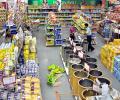
Reliance Retail has entered the Indian fast-moving consumer goods space as it takes its private label brands, sold at its supermarkets and hypermarkets, Reliance Fresh and Reliance Smart, to general trade. The company had internally set a target of Rs 50,000 crore turnover from the FMCG business, which will fall under Reliance Retail's consumer brand division. Business Standard accessed a presentation which includes the brands it has taken to the general trade.

In May, Satpal Singh, who runs a dairy business with three buffaloes in Jewar, near Noida, was worried about the steep spike in input costs. Singh said dry fodder rates, which cost Rs 1,500-2000 per tractor trolley last year, were quoting at Rs 4,500-5,000. The price of other cattle feed ingredients (that include mustard meal and similar mixes) had also gone up from Rs 2,000 per quintal to Rs 3,100-3,200 per quintal.

After becoming active over the rice-growing Indo-Gangetic plains, the southwest monsoon might witness weak phase for the next 3-4 days over the already rain-deficient region. So far, the main deficit states are Uttar Pradesh (-42 per cent), Bihar (-36 per cent), Jharkhand (-48 per cent), and West Bengal (-24 per cent). According to private weather forecasting agency Skymet, rains in west UP, Punjab, Haryana, Bihar, and Jharkhand are expected to be weak in the next 3-4 days before again picking pace.

India's plan to produce ethanol from second-generation (2G) sources -- mainly farm waste -- is taking time to materialise even as the government is set to dedicate to the nation on Wednesday a Rs 900-crore plant set up by Indian Oil Corporation (IOC) in Panipat. Though state-run oil companies had decided to set up at least 12 plants in 2016-17 with an investment of around Rs 10,000 crore, this will be the first unit coming on track while others are stuck in various stages owing to issues like capital expenditure, lack of feedstock, and high rates of finished products compared to traditional ethanol units. According to industry sources, three more second-generation plants are coming up.

Microsoft has become the first global Big Tech company to join the Open Network for Digital Commerce (ONDC), an Indian government initiative for developing a first-of-its-kind open network for digital commerce. The world's second-largest technology firm intends to introduce social e-commerce via its app in the Indian market later this year. ONDC is expected to open to the public in Bengaluru over the next fortnight as it enters into the next phase of the pilot for further fine-tuning before rollouts in other cities, according to a source in the know.
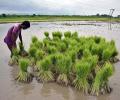
The area under paddy - the biggest foodgrain during the kharif season - was almost 13 per cent lower in the week ended August 5 as compared to the same period last year despite a slight pick-up in rains in the main growing regions, triggering fears of a 10-12 million-tonne drop in final output. Sources said with the peak sowing season for paddy almost coming to an end in the big-growing states, any uptick in coverage from here onwards may not give the desired yields. With 30 per cent of normal average area in which paddy is grown every year remaining unsown till early August, there is a limited chance of a big uptick in output, trade and market sources said.
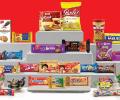
Indian consumers are likely to get respite from rising prices just before the festival season. Some consumer companies, including automakers, have indicated that they are planning to pause price hikes just before demand picks up in August, while keeping a close eye on volatile raw material prices.

Centre's move to form a 29-member panel on making the minimum support price (MSP) mechanism effective and keeping three positions vacant in it for SKM representatives has triggered strong disapproval from it.
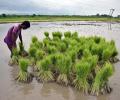
Trade and market players have already started factoring in at least 10 million tonnes drop in production in rice in the kharif season as compared to last year due to delayed sowing.
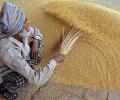
A head of its meeting, the Reserve Bank of India (RBI) can take some solace from the softening food commodity prices. However, the events surrounding the last few weeks show that the fall may not be uniform across all commodities, and cereals like wheat and rice could be the outliers. A Reuters report said that local wheat prices jumped to a record Rs 23,547 per tonne on Wednesday. That is a 12 per cent rise from the recent lows that followed the government's surprise ban on exports on May 14.

Consumer-focused companies have been left with few options but to increase the prices of their products as input costs mount because of various factors, including supply chain disruptions. This has been affecting monthly household budgets. Prices of scores of items -- from spices to soaps to rice -- have increased in the past year.

Open Network Digital Commerce (ONDC) has expanded its pilot to 15 more cities. This comes at a time when it plans to begin operations next month. Snapdeal has also signed the onboarding agreement with the network and will debut on it next month. On Monday, ONDC expanded to Noida, Faridabad, Lucknow, Bijnor, Bhopal, Chhindwara, Kolkata, Pune, Chennai, Kannur, Thrissur, Udipi, Kanchipura, Pollachi, Mannar and Ramnathpuram.

Nearly eight months after the government repealed the three controversial farm Acts, it has constituted a high-powered panel under the chairmanship of former agriculture secretary Sanjay Agarwal to make the minimum support price (MSP) mechanism more effective and transparent as promised by Prime Minister Narendra Modi in his televised address announcing the repeal. The names of three members from the Samyukta Kisan Morcha (SKM), the main grouping that spearheaded the year-long agitation at Delhi's borders, have been withheld, pending receipt by the government, stated a gazette notification. NITI Aayog member Ramesh Chand, Indian Institute of Management-Ahmedabad Professor Sukhpal Singh, Indian Farmers Fertiliser Cooperative chairman Dilip Sanghani, secretaries of the Departments of Agriculture, Indian Council of Agricultural Research, Food and Consumer Affairs, Cooperation and Textiles, along with representatives from the state governments of Karnataka, Andhra Pradesh, Sikkim, and Odisha will also form part of the panel.

While the experience of summers has been uncomfortable, the actual readings on thermometers may cause wonder about the exaggerated discomfort. This is what meteorologists call 'real feel temperature' or 'real feel heat'. Sanjeeb Mukherjee explains.
Fast-moving consumer goods (FMCG) sales continued to be lower in June compared to May with urban sales witnessing a steeper decline than rural. Sales of goods from shampoos to biscuits stayed lower due to inflationary pressures on commodities. This pushed consumer companies to continue taking price hikes, thus impacting demand, according to data by Bizom.

Even as raw material prices start cooling off from their peaks, fast-moving consumer goods (FMCG) companies' margins are expected to remain under pressure at least in the next quarter. This is because commodity prices continue to remain high year-on-year (YoY). Consumer companies will also continue to increase rates as they have been taking price hikes in a staggered manner. They have not yet passed the entire price increase of raw materials to consumers.
 © 2025 Rediff.com - Investor Information - Advertise with us - Disclaimer - Privacy Policy - Sitemap - Feedback - About us - Terms of use - Grievances